
Search
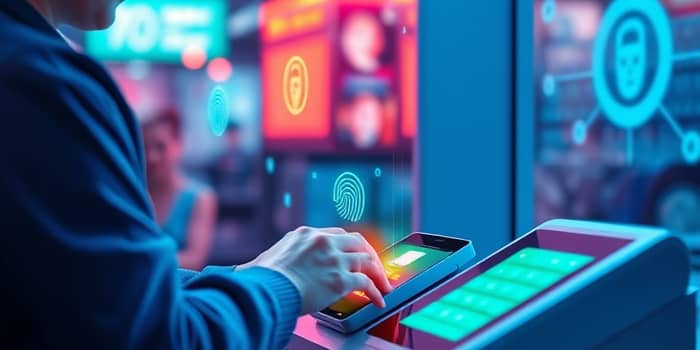
In an era defined by rapid technological advances, the way we handle money is evolving at an unprecedented pace. Biometric payments harness unique biological markers to create an experience that is both faster, more seamless, and more secure than traditional methods. From smartphones to in-store kiosks, biometric authentication is reshaping the financial landscape.
As consumers and businesses seek to reduce fraud and enhance convenience, biometric systems emerge as a transformative force. This article delves into definitions, market dynamics, adoption trends, technology modalities, real-world use cases, regional insights, and practical tips for embracing this revolution.
Biometric payments rely on unique biological or behavioral traits—such as fingerprints, facial geometry, iris scans, voice patterns, and palm veins—to authenticate and authorize transactions. Rather than relying solely on something you know (passwords, PINs) or something you own (cards), this approach leverages something you are for more robust security.
These systems have found applications across multiple channels:
The global biometric payment market stood at USD 8.53 billion in 2023 and is on track to accelerate sharply over the coming decade. Industry analysts forecast a rise to USD 9.91 billion in 2024 and an impressive USD 34.71 billion by 2032, reflecting a compound annual growth rate of approximately 17.0% (2024–2032).
Regional leaders include North America (37.16% share in 2023) and an Asia-Pacific region experiencing the highest CAGR driven by mobile super apps in China, India, and Japan. Europe, Middle East & Africa, and South America each exhibit noteworthy growth as retailers and banks expand biometric deployments.
Trust and familiarity have surged, moving biometric payments from novelty to mainstream:
These figures illustrate a growing trust year-over-year among users and a clear tipping point toward widespread adoption. Contactless transactions are set to rise by more than 520% from 2020 to 2025, highlighting the demand for hygienic, frictionless experiences.
The biometric technology landscape divides along two axes: modality and implementation. On the modality front:
Fingerprint recognition remains the dominant contact-based method, prized for its maturity and high accuracy. However, face, iris, and voice recognition—all contactless—are registering the highest CAGRs worldwide due to their convenience and speed.
Beyond these, emerging, niche but growing modalities such as palm/vein scanning and behavioral biometrics are gaining traction. On the implementation side, dedicated hardware (sensors, secure chips) currently captures the largest market share, offering fraction-of-a-second authentication speed boosts. Software innovations—AI-driven liveness detection and fraud scoring—complement hardware investments, ensuring robust defenses against spoofing and identity theft.
Biometric payments serve as a horizontal enabler across industries, streamlining processes and fortifying security:
These diverse applications underscore biometrics’ versatility—from securing sensitive health data to expediting everyday purchases.
North America led the market in 2023 with rapid integration of biometric cards, ATMs, and mobile apps. The Asia-Pacific region, by contrast, benefits from a mobile-first populace and super app ecosystems in China and India, driving phenomenal growth rates.
Europe’s strong banking infrastructure fosters widespread adoption of biometric ATMs and payment apps. Meanwhile, the Middle East, Africa, and Latin America are leapfrogging legacy systems, deploying biometric kiosks to serve emerging e-commerce and retail sectors.
Globally, total revenue for biometric suppliers from payments is projected to exceed USD 11.5 billion by 2030, signaling sustained investment and innovation.
To harness the full potential of biometric payments, stakeholders should consider the following guidance:
Consumers: enroll multiple biometric modalities on your devices to ensure fallback options, regularly update software for liveness detection enhancements, and review privacy settings on payment apps.
Businesses: pilot biometric systems in low-risk environments first, partner with trusted vendors offering robust encryption and compliance frameworks, and provide clear user education to build confidence. Monitor transaction volumes and fraud metrics to fine-tune thresholds and risk-scoring algorithms.
By adopting these strategies, organizations can deliver contactless, hands-free authentication processes that delight customers while safeguarding their data.
As biometric payments continue to mature, they promise to redefine our relationship with money—making every transaction more intuitive, inclusive, and impervious to fraud. Embracing this technology today positions consumers and businesses at the forefront of a secure, seamless financial future.
References