
Search
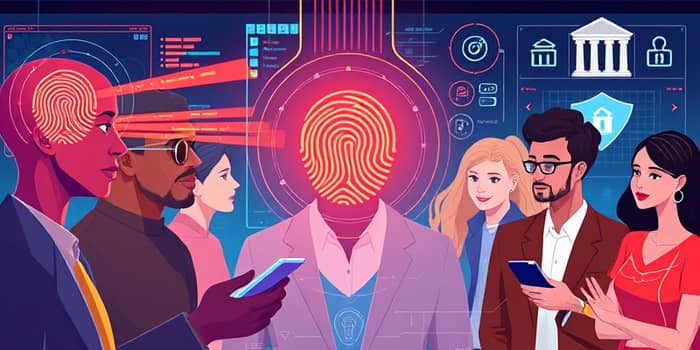
In an era defined by relentless cyber threats and evolving fraud tactics, financial institutions are abandoning the era of stolen passwords and weak PINs. They are embracing the singular uniqueness of each customer "+ excising the friction of forgotten codes and the vulnerability of shared secrets.
Biometric security places "+ customers’ innate traits at the center of defense, ensuring that only legitimate users gain access to sensitive accounts and transactions. From fingerprint sensors to facial recognition cameras, this technology is redefining trust in banking.
Traditional authentication methods rest on "the three Rs": something you know, something you have, and something you are. Yet in banking, "what you know" often fails. Password breaches, phishing scams, and credential stuffing erode confidence and invite costly fraud.
Now, the industry champions "what you are"—your unique biological traits—as the gold standard. With what you know is not enough becoming a rallying cry, banks deliver seamless, secure access anywhere without the burden of memorized passwords.
Biometric technologies extend far beyond simple fingerprint scans. They harness advanced sensors, AI models, and liveness detection to verify identity with remarkable speed and precision.
From everyday bank access to high-value transfers, biometrics solidify security and streamline user journeys across operations.
Data-driven decision-making underscores the rapid adoption and tangible benefits of biometric security in finance.
This surge reflects not only a technological shift but also a consumer demand for harder to spoof or replicate authentication methods that inspire confidence.
Financial institutions reap multifaceted rewards by embedding biometrics across their digital and physical channels.
With $460 million in potential onboarding savings and growing digital identity spending forecast to exceed $80 billion by 2028, the financial upside is undeniable.
While biometrics fortify defenses, they introduce new considerations around privacy, technology risks, and evolving regulations.
Deepfake generation, quantum-computing threats, and algorithmic biases prompt continued innovation in liveness detection and AI-driven anomaly detection. Institutions adopt privacy-by-design with biometric templates stored securely on-device to comply with strict data-protection laws.
Emerging trends include zero-trust architectures, passwordless ecosystems, and conversational banking powered by voice biometrics. Contactless solutions combining facial and iris scans aim to reduce surface contact and heighten convenience.
Leading banks and fintechs showcase biometrics at scale. Wells Fargo, HSBC, and OCBC leverage facial recognition for mobile logins, while Revolut and Monzo onboard customers via selfie-ID matching. Banco Popular Dominicano deploys remote fingerprint scanning to meet AML requirements in underserved markets.
Globally, 600–700 institutions have integrated facial biometrics, and 671 million users authenticated payments in 2020—a figure projected to double by 2025. These pioneers set a new industry benchmark.
As cybersecurity threats escalate and consumer expectations rise, biometric security stands at the forefront of innovation. By embracing your unique traits as the key to your digital vault, banking becomes not just safer, but truly personalized. The journey from passwords to personal traits is well underway—your bank is now, quite literally, in your hands.
References