
Search
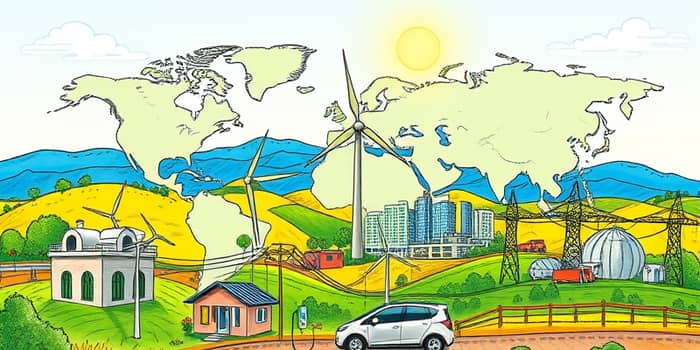
In an era defined by environmental urgency, investors are recognizing climate change as a defining investment theme. Global capital flows are rapidly realigning toward sustainable solutions that balance financial returns with planetary stewardship.
Climate finance has reached unprecedented levels, with USD 1.46 trillion in 2022, nearly doubling since 2019. Major forecasts suggest USD 2.1 trillion of energy transition investment in 2024, marking an 11% year-on-year increase. For the first time ever, private climate finance topped USD 1 trillion in 2023, signaling robust corporate and institutional commitments.
Yet the scale of the opportunity remains immense. Emerging markets alone require USD 23 trillion in climate-smart investments by 2030, according to IFC estimates. Clean energy attracts roughly USD 350 billion per year, outpacing fossil fuels by a factor of two.
Investor surveys underline this momentum: 84% believe companies must maintain or increase climate adaptation investments despite political headwinds, while two-thirds prioritize energy demand management and over half focus on climate resilience strategies. Still, only 30% have fully committed to scaling their climate solutions, revealing untapped potential for further capital deployment.
Nationally Determined Contributions (NDCs) serve as the primary pipeline for climate projects. IFC’s USD 23 trillion target is rooted in the NDCs of 21 emerging economies. Over 60 countries have updated their NDCs in the current COP cycle, reinforcing private sector mobilization strategies.
Global climate-finance mechanisms provide crucial funding channels:
Ahead of COP30, investors are calling for clear, predictable policies around fossil fuel phase-down, transition planning and adaptation financing. Harmonizing regional ambitions could unlock trillions in additional capital.
Europe reclaimed its leadership in climate investing in 2025, with 62% of investors prioritizing decarbonization. The region’s stringent regulations, robust funding frameworks and clear taxonomy create a stable, lower-risk return environment.
Competition and valuation premiums are high in mature markets, but Europe remains a hotbed for climate tech scale-ups in hydrogen, storage and carbon capture.
US investor prioritization has softened, reflecting policy uncertainty and shifting capital abroad. Yet energy transition incentives akin to the US Inflation Reduction Act continue to channel billions into renewables, EV manufacturing and battery production.
Despite political headwinds, the US remains a pivotal innovation hub, offering high-growth potential in early-stage climate technologies and climate risk analytics.
Emerging economies represent the largest growth frontier. IFC estimates USD 3 trillion in African climate investments by 2030, with 75% expected from private sources. South Asia alone has a USD 2.2 trillion opportunity in resilient infrastructure, covering ports, rail and green buildings.
East Asia’s green building potential exceeds USD 16 trillion, driven by China, Indonesia and Vietnam. Latin America’s NDCs emphasize sustainable transport networks, rail, urban transit systems and EV rollout.
Investors in these regions value bankability improvements and pipeline visibility. Multilateral development banks and blended-finance structures are de-risking projects and attracting new entrants. Nature-based solutions, such as reforestation and sustainable agriculture, offer high-impact returns alongside biodiversity benefits.
Across all continents, the message is clear: climate change investing is not just an ethical imperative but a profound economic opportunity. By aligning capital with the planet’s needs, investors can harness innovation, drive resilient growth and secure sustainable returns.
As the global transition accelerates, those who navigate regional nuances, leverage policy frameworks and back transformative sectors will lead the next wave of financial performance. The time to act is now—shaping a future where profit and planet progress in harmony.
References