
Search
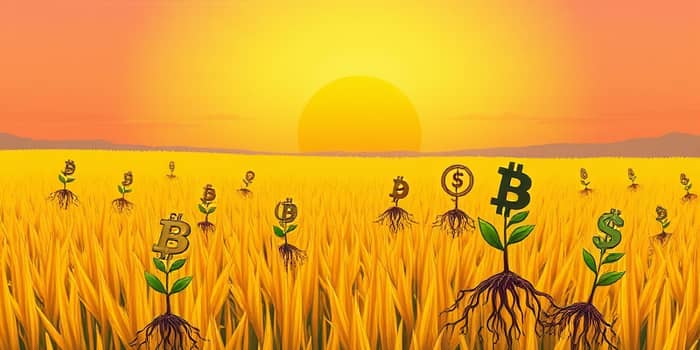
Just as a farmer tends to fertile soil, investors can learn to cultivate their capital and reap a bountiful harvest of returns. By blending time-tested agricultural metaphors with cutting-edge finance, you can build a resilient portfolio that grows steadily through bull and bear seasons alike.
In agriculture, success begins with careful planning: selecting the right seeds, preparing the soil, and timing the planting. Similarly, nurturing your investments for optimal yield requires setting clear goals, researching market conditions, and choosing the right mix of assets.
Start by defining your horizon. Are you planting a short-season crop of high-yield, high-risk instruments, or sowing seeds for a decades-long orchard of stable bonds and dividend stocks? Each path demands different tools and patience.
Yield farming in decentralized finance turns your assets into the seeds that grow within blockchain-based protocols. By depositing tokens into liquidity pools, you earn rewards in the form of interest or new tokens. Operations are governed by smart contracts, offering monitoring and adjusting returns via smart contracts for transparency and control.
To start, connect your wallet to a platform like Aave or Uniswap, choose a pool that aligns with your risk appetite, deposit your assets, and watch the smart contract automate compounding. Keep an eye on impermanent loss, protocol risks, and gas fees.
This table highlights five core DeFi strategies. Consider starting with stablecoins to build confidence before exploring more advanced approaches like cross-chain farming or leveraged positions.
While DeFi offers tantalizing returns, traditional instruments remain the bedrock of a balanced portfolio. Tapping into low-risk yields can anchor your overall growth and protect against high-volatility swings.
Beyond these, alternative strategies—private credit, real estate income, and infrastructure funds—can offer incremental yield premiums, akin to planting specialty crops in fertile niches.
Crop rotation prevents soil exhaustion and disease. Likewise, diversify across traditional and DeFi platforms to spread risk and capture multiple yield sources. Aim for an allocation mix that balances stable income and growth-oriented assets.
Use analytics tools, rebalance periodically, and stay alert to new protocols or fund offerings. Tools like Yearn Finance and Beefy simplify auto-compounding and rebalancing, acting like automated irrigation systems for your financial fields.
In farming, pests and weather threaten yields. In finance, volatility, smart contract bugs, and regulatory shifts pose risks. Implement the following safeguards to ensure durability:
due diligence on projects and teams: Examine code audits, governance structures, and community reputation. Avoid pools with suspiciously high APYs lacking transparent backing.
harvesting rewards and reinvesting dividends: Instead of chasing every new protocol, focus on long-term compounding by reinvesting earned tokens or interest.
adapt to market shifts proactively: Monitor macroeconomic indicators—rate cuts, inflation data, fiscal policy—to rotate between defensive and growth-oriented positions.
balancing risk and reward effectively: Allocate no more than a predefined percentage to high-risk yield farms. Use stop-loss triggers or stablecoin reserves to cushion against sudden downturns.
The greatest returns often come to those who plant trees under whose shade they do not expect to sit. By maintaining a long-term outlook, you can weather short-term volatility and harness the power of compounding over years or even decades.
Regularly review historical performance benchmarks—such as high-yield bond cycles and S&P 500 returns—to set realistic targets. Simulate APY outcomes using online calculators, adjusting for protocol fees and gas costs to avoid overestimating your harvest.
Finally, engage with communities—forums, governance proposals, developer updates—to stay informed and influence the future of the platforms you use. Your active participation can help steer protocols toward greater transparency and security.
From selecting stablecoin fields to staking in cross-chain orchards, the art of steady income from low-volatility assets and high-growth strategies lies in balance. By sowing seeds thoughtfully, tending to risks, and harvesting rewards with discipline, you transform scattered investments into a flourishing financial ecosystem.
Whether you’re a seasoned yield farmer or just starting to plant your first digital seeds, remember: growth is not guaranteed overnight, but with patience and diligence, you can nurture capital that stands the test of seasons.
References