Search
In an era where our factories, cities, and critical services hinge on seamless interactions between software and hardware, cyber-physical systems (CPS) stand at the forefront of innovation—and vulnerability. These systems reshape industries by marrying computation, networking, and control with tangible assets, but they demand new security paradigms. From autonomous vehicles navigating crowded streets to smart grids balancing energy loads, CPS power the future. Yet every sensor, actuator, and network link broadens the attack surface, making robust defense strategies essential.
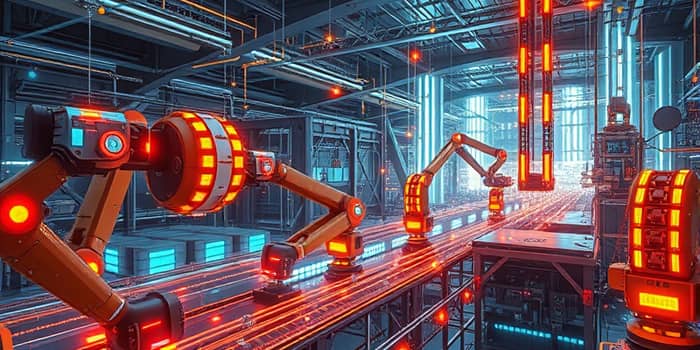
At their core, cyber-physical systems integrate sensing, computation, control, and networking into physical objects and infrastructure. Unlike standalone IoT devices or traditional embedded controllers, CPS rely on tight feedback loops between the digital and physical realms. Every data point captured by a sensor may trigger complex algorithms that adjust motors, valves, or actuators in real time.
Consider a digital twin of a high-precision assembly line: simulated models run in parallel with live operations, enabling proactive corrections and performance optimization. This seamless modeling and control empowers manufacturers to detect deviations before they escalate, improving efficiency and safety. Across domains—from smart buildings to medical robotics—CPS deliver unprecedented responsiveness and autonomy.
As CPS proliferate, so do the opportunities for malicious actors. Their interconnected nature creates converging surfaces where IT and OT vulnerabilities collide. Traditional IT defenses often fall short against specialized industrial protocols and real-time constraints.
Failures in these systems can have dire consequences. A compromised autopilot in an aircraft or a disrupted control signal in a power grid may endanger human lives and cripple economies. Understanding the evolving threat landscape is the first step in forging resilient protections.
Securing CPS requires a holistic approach that blends traditional cybersecurity with specialized operational safeguards. Leading solutions now take the form of comprehensive protection platforms designed specifically for industrial environments. These platforms leverage deep protocol knowledge and continuous behavioral analysis to detect anomalies and respond in real time.
Key defensive strategies include:
Translating strategy into action demands meticulous planning and cross-disciplinary collaboration. Security teams must partner with control engineers and system architects to embed protections without disrupting operations.
Begin with a comprehensive asset inventory, mapping every sensor, actuator, and communication link. Risk scoring should prioritize safety-critical nodes, guiding investment in defenses where they matter most. Continuous monitoring and analysis form the backbone of resilient operations, enabling rapid detection and remediation of threats.
Training and culture are equally important. Operators and engineers should receive regular cybersecurity awareness sessions. By fostering an environment of shared responsibility, organizations can transform potential weak links into active defenders.
The next generation of CPS will push the boundaries of autonomy and intelligence. Research into self-healing architectures envisions systems capable of detecting, isolating, and recovering from attacks without human intervention. AI-driven orchestration will enable resource optimization across vast infrastructures, from smart cities to distributed energy grids.
Digital twins will mature into living models, continuously synchronized with their physical counterparts. This evolution promises predictive maintenance at unprecedented scales, slashing downtime and costs. Yet as systems grow more complex, security must scale in parallel, leveraging advanced cryptography, blockchain-based integrity checks, and zero-trust principles tailored to real-time operations.
Cyber-physical systems represent humanity’s most ambitious technological endeavor: the fusion of mind and matter at digital speed. By understanding their unique risks and adopting layered, adaptive defenses, we can unlock the full potential of CPS while safeguarding lives and livelihoods.
As we stand on the threshold of a hyper-connected world, the choices we make today will define our collective resilience. Through innovation, collaboration, and unwavering commitment to security, we can ensure that the interconnected world remains a force for progress rather than peril.
References