Search
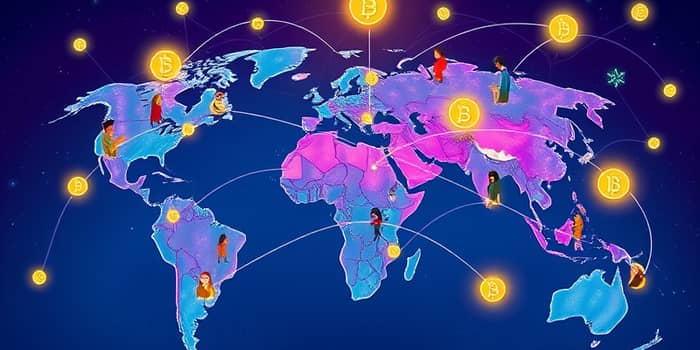
In an era where technology intersects with money, decentralized finance emerges as a catalyst for transformation.
DeFi leverages blockchain protocols to reimagine traditional banking and financial systems. With permissionless access without traditional onboarding, individuals worldwide can engage in lending, trading, and asset management. This article explores how DeFi functions, its explosive growth, the forces driving adoption, and the challenges that lie ahead.
At its core, DeFi refers to financial services executed via smart contracts on public blockchains rather than through centralized intermediaries. These programmable agreements automate processes from lending to derivatives trading, removing traditional gatekeepers.
Protocols operate on networks such as Ethereum, layer-2 solutions, and alternative layer-1 blockchains. Native tokens serve as collateral and governance assets within decentralized autonomous organizations (DAOs), enabling community-driven decision-making.
DeFi protocols share four core properties that differentiate them: permissionless access without traditional onboarding, programmatic composability across platforms seamlessly, transparent on-chain transaction records, and non-custodial control of digital assets. Together, these features create an ecosystem defined by open collaboration and resilience.
The scale of DeFi has expanded dramatically in recent years. According to Precedence Research, the global DeFi market reached USD 21.04 billion in 2024 and is projected to hit USD 32.36 billion by 2025. By 2034, forecasts suggest this figure could soar to USD 1,558.15 billion, representing a compound annual growth rate of approximately 53.8%.
Alternative estimates from The Business Research Company place the 2025 market size at USD 42.56 billion, growing to USD 178.06 billion by 2034 at a CAGR of 43%. These variations underscore evolving definitions and methodologies surrounding DeFi’s scope.
Industry trackers report total value locked (TVL) as a key health indicator. Since 2021, TVL across major blockchains has surged over 200%, reflecting rising user confidence. Tokenization of real-world assets underpins growth, linking on-chain protocols to tangible collateral.
Beyond DeFi-specific data, the broader blockchain technology market is poised to reach USD 57.7 billion by 2025 and approach USD 1.4 trillion by 2030, highlighting rapid expansion and continuous innovation across the ecosystem.
DeFi’s growth is inseparable from the global surge in crypto adoption. Estimates indicate between 560 and 650 million crypto users worldwide by 2025, with stablecoins dominating cross-border transaction flows and serving as primary on-ramps into DeFi.
Retail activity surged more than 125% between early 2024 and late 2025, signaling a shift from institutional to consumer-driven demand. In many emerging economies, crypto and DeFi offer solutions for remittances, savings, and inflation hedging.
These top-ranking countries illustrate DeFi’s role as a bridge between traditional finance and DeFi, particularly in regions grappling with currency volatility. Chainalysis data shows APAC grew 69%, Latin America 63%, Europe 42%, MENA 33%, and North America’s growth rate rose from 42% to 49%. Fiat on-ramps have funneled over USD 2.4 trillion through U.S. rails, followed by South Korea at USD 722 billion and the EU at USD 250 billion.
Demographically, over 51% of crypto holders are aged 18–34, emphasizing adoption among digital natives and signaling empowering individuals with financial sovereignty across age groups and geographies.
DeFi protocols democratize access to services once reserved for large institutions, opening avenues for underbanked populations to obtain credit, earn yield, and participate in global markets.
Innovations in tokenizing real-world assets (RWA) grew from approximately USD 8.5 billion in early 2024 to nearly USD 34 billion by mid-2025, a 380% increase. This trend illustrates DeFi’s potential to unite traditional and digital finance, fostering unprecedented growth and evolving market dynamics.
Decentralized governance models empower communities to vote on protocol upgrades and risk parameters, reshaping governance through decentralized structures and aligning incentives in novel ways. As DAOs mature, they may redefine organizational leadership, steering capital toward public goods and community-driven projects.
Despite its promise, DeFi faces significant hurdles. Regulatory scrutiny is intensifying as authorities seek balance between innovation and consumer protection. Varying definitions of DeFi across jurisdictions complicate compliance and regulatory frameworks.
Security risks—such as smart contract vulnerabilities, governance exploits, and phishing attacks—underscore the need for robust auditing and insurance mechanisms. Liquidity fragmentation across blockchains also presents efficiency challenges, driving demand for cross-chain bridges and interoperability solutions.
Looking ahead, layer-2 scaling protocols and cross-chain standards will be critical in managing transaction volumes and reducing fees. Collaboration among regulators, developers, and industry stakeholders can foster clear standards that support responsible growth, enabling DeFi to mature into a stable and trusted component of the global financial system.
The shift toward decentralized finance marks a fundamental transformation in how services are produced, accessed, and governed. From innovators building permissionless protocols to millions of users seeking autonomy, DeFi represents a vision of financial systems that are inclusive, transparent, and resilient.
As we navigate this paradigm shift, embracing collaboration, experimentation, and responsible regulation will be key. The DeFi revolution invites us all to rethink the future of finance and unlock new opportunities for global prosperity.
References