
Search
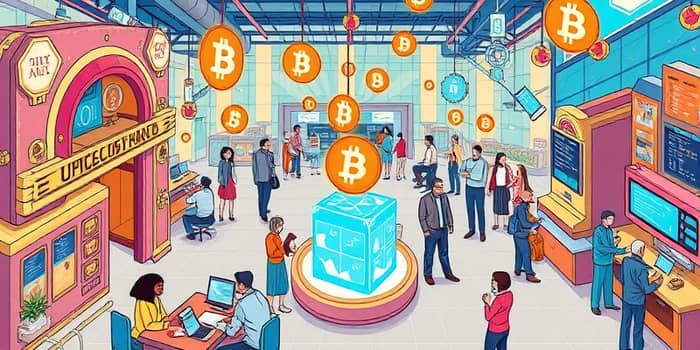
Decentralized finance is no longer an isolated crypto playground. It is maturing into a transformative layer that can overhaul the foundations of banking, payments, lending, and capital markets worldwide.
At its core, decentralized finance (DeFi) leverages distributed ledger technology and smart contracts to provide services such as trading, lending, asset management, and derivatives without relying on centralized intermediaries. It aspires to create a trustless, programmable, inclusive financial ecosystem governed by code on open networks.
Traditional finance (TradFi), by contrast, depends on regulated banks, custodians, exchanges, and clearinghouses. Transactions are managed through internal ledgers under licenses and regulatory oversight, allowing authorities to reverse or halt activities when necessary.
Legacy financial systems face persistent challenges that DeFi protocols directly address. For decades, opaque markets and lengthy settlement cycles have hindered efficiency, transparency, and inclusion.
In response, DeFi offers a suite of advantages by embedding financial logic directly into programmable contracts and open networks.
Industry leaders increasingly recognize that the future lies not in battling each other, but in forging hybrid or integrated models. The narrative is shifting from “DeFi versus TradFi” toward hybrid or integrated models bridging industries, where legacy institutions and decentralized protocols collaborate for mutual benefit.
These categories illustrate a broader architectural blueprint for integration. At the top sits the application layer—user-facing portals, mobile apps, and wallets. Beneath it, middleware translates between bank IT systems and blockchain protocols, handling identity, compliance, and data normalization. At the core lies the shared state layer: public or permissioned blockchains, smart contract libraries, and oracles providing real-world data feeds.
This layered approach allows banks to retain familiar interfaces and regulatory controls while tapping into the efficiency and transparency of decentralized networks. It paves the way for innovations such as on-chain corporate actions, automated dividend distributions, and real-time regulatory reporting.
As DeFi primitives mature, the synergy with TradFi will accelerate. Early pilots of tokenized bonds and digital money-market funds demonstrate low-risk, high-impact first steps toward broad adoption. Once these foundations are laid, more complex integrations—cross-border payment hubs, decentralized credit facilities, and fully automated corporate finance—will follow.
Regulators worldwide are watching. Clear frameworks for compliant stablecoins, digital asset custody, and on-chain governance will be critical to scaling hybrid models. Collaboration between policymakers, traditional institutions, and DeFi innovators can yield frameworks that protect consumers without stifling creativity.
Ultimately, the goal is a financial ecosystem that combines the trust and consumer protections of regulated institutions with the openness, efficiency, and resilience of decentralized protocols. By reimagining the plumbing of global finance, DeFi beyond crypto speculation promises to unlock unprecedented opportunities for inclusion, innovation, and growth.
The lines between TradFi and DeFi will continue to blur as each side learns from the other. Institutions that embrace this transformation early will gain a strategic edge, offering clients faster, cheaper, and more transparent services. Meanwhile, DeFi platforms that integrate robust compliance and institutional-grade security will attract new flows of capital.
In this emerging era of internet-era market infrastructure, the promise of democratized finance moves closer to reality. Stakeholders across the spectrum must collaborate to navigate challenges, mitigate risks, and build systems that serve everyone. The future of finance is not solely centralized or decentralized—it is a blended network that leverages the strengths of both worlds to create a more inclusive, efficient, and resilient global economy.
References