
Search
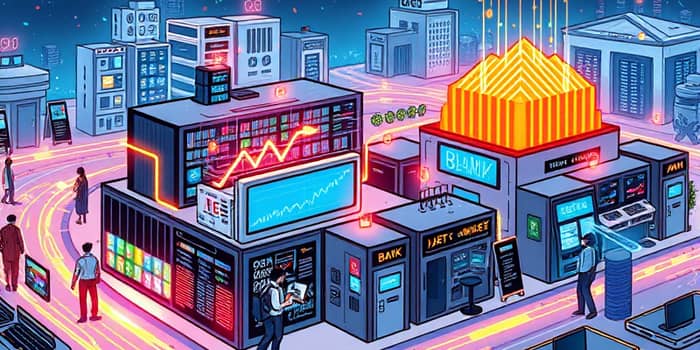
In today’s fast-paced financial landscape, the ability to process and act on data within milliseconds can define competitive advantage. Edge computing brings compute power, storage, and AI models closer to where information is generated—exchanges, branches, ATMs, and mobile endpoints—enabling institutions to thrive in an era of unprecedented data velocity.
Traditional central data centers introduce delays that can erode margins. By placing intelligence at the periphery, firms achieve real-time, low-latency financial analysis and unlock new capabilities.
Edge computing architectures in finance typically span several layers and locations, each optimized for specific workloads and compliance contexts.
A typical data pipeline unfolds as follows:
1. Sensors and APIs capture high-frequency events near sources, from order books to card swipes and video feeds.
2. Local nodes run real-time model inference locally, computing risk scores, fraud alerts, or price predictions.
3. Business logic makes instant decisions at the edge—approving transactions, routing orders, or triggering alerts.
4. Summaries, aggregates, and model outputs stream to centralized systems for deep analytics, retraining, and archiving.
Edge computing reshapes multiple domains across financial services. Institutions can harness the power of distributed intelligence to innovate and mitigate risks.
Trading, Market Making, and Pricing
High-frequency trading firms deploy micro data centers beside exchanges to ingest market feeds, execute algorithms, and place orders with microsecond precision. Smart order routers normalize data, select venues, and rebalance portfolios in near real time, boosting execution quality and P&L accuracy.
Payments and Core Banking Transactions
Authorization engines at payment gateways apply fraud-scoring models locally, spotting anomalies—such as unusual login patterns or out-of-region activity—before they compromise accounts. Contactless and mobile payments benefit from reduced round-trip times, ensuring frictionless customer experiences.
Branch and ATM Analytics
Edge servers in branches run advanced customer segmentation and recommendation models on the fly, delivering tailored offers and investment advice during face-to-face consultations. ATM cams and biometric sensors perform real-time video analytics for queue management and security, lowering operational costs and compliance risks.
Fraud, AML, and Cyber-risk Detection
Distributed nodes at correspondent banking points and payment switches enforce real-time AML rules and ML-based anomaly detection. Security logs, API calls, and network telemetry are processed on-site, enabling rapid threat response and minimizing the window for malicious activity.
Successful edge deployments balance technical innovation with operational rigor. Financial institutions should consider the following guidelines:
As AI models grow more sophisticated and data volumes continue to skyrocket, edge computing will become the linchpin of agile, scalable financial services. Institutions that embrace seamless edge-to-cloud collaboration will unlock deeper insights, faster innovation cycles, and a more resilient operational footprint.
By distributing intelligence to the points of highest impact—trading venues, branches, ATMs, and mobile devices—financial firms can anticipate market shifts, preempt risks, and deliver personalized experiences at scale. In this new era, edge computing is not just an infrastructure choice; it’s a strategic imperative for any organization determined to lead the digital transformation of finance.
References