
Search
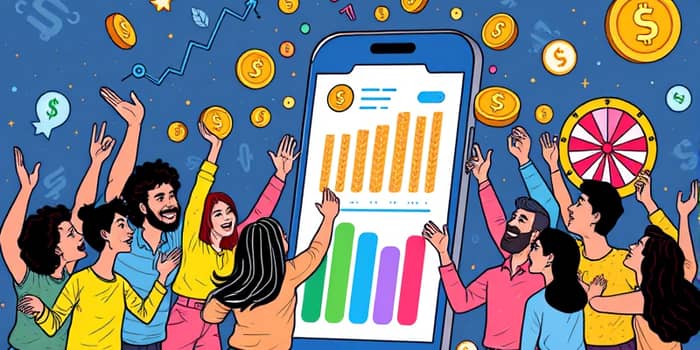
In today’s fast-paced world, managing money can feel like a chore. Yet, necessity demands that we save, budget, and invest wisely. What if these essential tasks could feel as exciting as playing a game? Enter gamified finance, a trend reshaping how we interact with money.
By weaving playful mechanics into financial services, companies are turning routine transactions into rewarding experiences. This approach taps into human psychology, creating game-like elements in financial apps that motivate and delight users.
At its core, gamified finance applies familiar game mechanics—points, badges, challenges—to non-game activities like saving, paying bills, and investing. The goal is to boost engagement, foster healthier habits, and demystify complex concepts.
These mechanics transform abstract financial targets into tangible, emotionally resonant experiences. By providing frequent feedback and small wins, apps guide users toward smarter decisions.
Gamified finance thrives on well-established behavioral science. The goal-gradient effect means people accelerate effort as they near a visible target—hence the power of progress bars. Meanwhile, small, frequent rewards to reinforce behavior trigger dopamine hits that encourage repetition.
Other key drivers include:
• Loss aversion & streaks: Nobody wants to break a multi-day saving streak. This fear of losing progress sustains consistent habits.
• Self-competition: Beating last month’s savings record frames finance as a personal challenge, reducing social pressure.
• Instant feedback: Celebratory animations and real-time points create emotional reinforcement right when the user acts.
By tapping into these instincts, gamified finance keeps users engaged and empowers them to develop long-term money management habits.
Personal finance apps lead the charge in applying gamification to everyday money tasks. By turning goals into interactive quests, they make financial planning approachable.
Qapital, for example, lets users set rules like rounding up purchases or automating savings when buying coffee. When a user reaches a milestone, celebratory badges appear, reinforcing positive behavior. PocketGuard relies on avoid breaking a saving streak logic via progress bars, pushing users to stay within budgets.
You Need A Budget (YNAB) offers a Loan Payoff Simulator that visualizes how extra payments reduce interest and shorten payoff timelines. Experimenting with different scenarios feels like tweaking strategy in a simulation game, make investing less intimidating and accessible.
Major banks and payment platforms have embraced gamification to boost digital adoption and customer loyalty. Google Pay in India issues digital scratch cards after eligible transactions, revealing cashback or vouchers instantly. This element of surprise adds fun to routine bill payments.
CRED, aimed at high-credit-score users, awards coins for on-time credit card payments. Members can spin a virtual wheel or try for a jackpot, blending low-friction automation through round-ups with suspenseful rewards. Ranking users by payment consistency also creates an aspirational status system.
Emirates NBD’s Fitness Account in the UAE links daily step counts to savings interest rates. Users sync with health apps, merging physical and financial goals. This unique crossover fosters a deeper emotional bond, encouraging both healthy and wealthy habits.
Traditional banks and fintechs alike deploy gamified elements to simplify saving. U.S. Bank’s Smartly Savings uses progress bars and celebratory animations when users reach targets like emergency funds or vacation nest eggs. Occasional cash bonuses further incentivize success.
Moneybox in the UK takes a different tack: it rounds up purchases to the nearest pound, converting spare change into investments. Users watch progress bars fill and receive badges as their investments grow, transforming fractional savings into a compelling game.
Credit card issuers naturally gravitate toward points, levels, and challenges. Chase Ultimate Rewards cardholders earn points per purchase and unlock bonus categories through limited-time offers. These tiered rewards feel like leveling up, motivating users to concentrate spending strategically while remaining aware of responsible use.
Gamification reduces the intimidation factor around investing. Platforms like Robinhood introduced confetti animations and instant trade confirmations, making market entry feel celebratory. Simpler apps even let beginners experiment in sandbox trading environments before risking real capital.
Some services add narrative elements, branding users as “investors” progressing through levels. Others host community challenges, such as mock trading contests that foster camaraderie while teaching market dynamics.
While gamified finance offers immense potential, design must be balanced with ethics. Clear communication around risks, transparent reward mechanics, and safeguards against addictive behaviors are essential. The goal is to empower users, not exploit psychological biases.
Looking ahead, we’ll see deeper personalization—adaptive challenges tailored to individual spending patterns—and richer social features, like friendly competitions among friends. As artificial intelligence and data analytics evolve, gamified finance will become even more intuitive, guiding users toward healthier financial futures with the same excitement typically reserved for gaming.
Ultimately, integrating playful mechanics into money management transforms daunting tasks into engaging journeys. By harnessing the power of behavior science and user-centric design, gamified finance holds the promise of making every financial milestone a moment to celebrate.
References