
Search
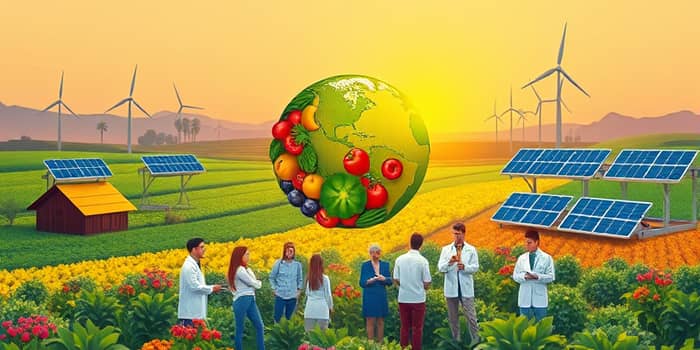
Global food systems are at a tipping point. Pressures that once seemed remote have converged, threatening to upend access to healthy, affordable food for billions. From erratic weather patterns to geopolitical conflicts, the challenges are complex and interlinked. This article explores the multifaceted crisis and charts a path toward sustainability and resilience.
In 2025, food systems grapple with climate change, population growth, poverty and more. Rising temperatures and unpredictable rainfall have begun to diminish agricultural productivity and nutritional value of staple crops.
Soil degradation, water scarcity, and loss of arable land are accelerating, while extreme weather events disrupt supply chains. Conflict and displacement exacerbate acute food insecurity, particularly among smallholder farmers in vulnerable regions. Meanwhile, unsustainable agricultural practices drive biodiversity loss, emit greenhouse gases, and degrade ecosystems, placing five of nine critical global processes at risk.
One-third of all food produced globally—an economic loss of nearly USD 1 trillion—is wasted or lost. This waste equates to enough meals to feed one-third of the U.S. population for a year, a stark moral failure amid widespread hunger.
In the United States alone, residential surplus has dropped 40%, yet 54 million tons of food could still be rescued annually, creating 18 million jobs over ten years and yielding $61 billion in net benefits. Shockingly, just 12% of donatable surplus reaches those in need, translating to 1.75 million meals from 47 million tons of food. Tackling waste offers a clear pathway to reduce emissions and alleviate hunger.
Transforming agri-food systems demands an estimated $1.1 trillion each year for the next five years. Yet, less than 5% of this need is currently met. Although global climate finance totals around $600 billion, only a fraction supports agriculture and food waste initiatives.
Foodtech investment reached $10.6 billion across 1,065 deals in 2024, driven by innovations in bioengineered foods, AI-driven inventory, and redistribution platforms. Despite this growth, funding slipped 67% from 2021 to 2024, highlighting volatility in private capital flows.
By mid-2025, over 130 countries have crafted national food systems pathways, with 159 appointing convenors to drive change. Of these, 39 have translated strategies into actionable plans, and 62% have integrated food priorities into broader national agendas.
The UN Food Systems Summit +4 (UNFSS+4) emphasized equity, data-driven policy, and finance mobilization, calling for blended finance and green bonds. European investments in sustainable agriculture and digital solutions have stabilized markets, illustrating how public–private partnerships can spur innovation at scale.
Emerging foodtech—such as bioengineered functional foods—has drawn landmark acquisitions and valuations, signaling investor confidence. Meanwhile, sustainable strategies already generate notable returns: 79% of companies reporting over 2% revenue growth from these efforts.
As the world approaches a population of 10 billion by 2050, demand on land, water, and resources will intensify. Yet, the combination of policy reform, innovation, and targeted investment offers hope.
With coordinated action at local, national, and global levels, we can halve food-related emissions, reduce waste, and secure nutrition for future generations. The time to invest in sustainability is now—turning crisis into opportunity and ensuring a resilient, equitable food future for all.
References