Search
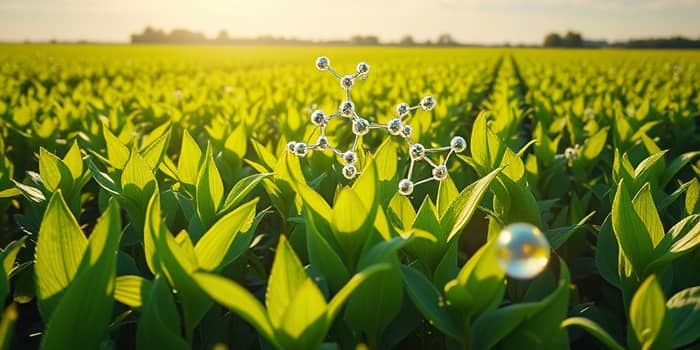
In an era of mounting climate challenges and growing nutritional needs, molecular agriculture emerges as a beacon of hope. By harnessing the power of plants as living factories, we can revolutionize how we produce food, medicine, and essential nutrients.
The concept of using plants to manufacture high-value molecules traces its roots to the 1980s, when the limitations of microbial systems drove researchers to explore eukaryotic hosts. Early experiments with tobacco and alfalfa cells revealed an extraordinary potential: plants could perform complex modifications that bacteria could not.
Over the next two decades, pioneers refined methods of gene transfer and expression, culminating in landmark achievements like Golden Rice. By inserting daffodil and maize genes into rice, scientists created a staple crop enriched with beta-carotene, designed to significantly reduce vitamin A deficiency and save millions of lives in vulnerable communities.
Today, molecular agriculture stands on the cusp of its next revolution, extending beyond pharmaceuticals into the heart of our food systems. Startups and established companies alike are charting a future where every farm can double as a biotech refinery.
At the heart of molecular farming lies a precise pipeline that transforms ordinary crops into producers of specialized compounds.
This workflow leverages genetically engineered plants as biofactories, combining traditional agronomy with cutting-edge molecular biology to achieve unprecedented scale and cost-effectiveness.
Molecular agriculture’s most immediate impact will be seen on our plates. From sweeteners to specialty proteins, plant-based platforms are redefining ingredient sourcing.
Moreover, staple crops can be fortified with essential vitamins and minerals. Golden Rice paved the way for nutrient-enriched staples that tackle malnutrition at source, embodying a holistic approach to sustainable food that marries yield with health.
One of molecular agriculture’s most compelling appeals is its potential to reduce agriculture’s ecological footprint. Compared to conventional fermentation or animal cell culture, plant biofactories can thrive with minimal infrastructure.
By leveraging sunlight, CO₂, and rainfall, molecular farming can achieve low cost of growing plants while drastically cutting greenhouse gas emissions and resource use. This scalable model holds promise for regions with limited energy infrastructure, democratizing access to advanced nutrition.
As with any transformative technology, careful governance is paramount. Regulators worldwide grapple with balancing innovation and safety in molecular agriculture.
Adhering to robust guidelines fosters public trust and paves the way for wider adoption, ensuring that molecular farming advances responsibly and transparently.
Investment in molecular agriculture has surged in recent years, with venture capitalists and agribusiness giants financing startups that promise to disrupt ingredient supply chains.
Cost models suggest that plant-based production can be half as expensive as microbial fermentation and an order of magnitude cheaper than mammalian cell culture. As processes mature, economies of scale and automation will drive costs even lower, unlocking new market segments.
Collaboration between agritech companies, academic institutions, and governments is catalyzing innovation hubs where researchers and farmers co-develop crop platforms. This complex cellular machinery plus agricultural scalability synergy underpins a new era of bioindustrial agriculture.
Looking ahead, molecular agriculture could reshape food security and medical manufacturing. Imagine staple fields that alternate production between vaccines during a pandemic and nutrient-enriched grains during harvest season.
Advances in synthetic biology may enable on-demand production of custom therapeutics in regional greenhouses, boosting local resilience. Precision breeding and gene editing will refine host crops to optimize yield, enhance stress tolerance, and expand the range of producible compounds.
In this vision, farmers become stewards of both food supply and biomanufacturing capacity, cultivating landscapes that sustain people and the planet in tandem.
By embracing molecular agriculture, we can forge a path toward huge scalability of agriculture that nourishes billions sustainably, mitigates environmental harm, and fosters equitable access to vital nutrients and medicines. The seeds of a brighter, healthier future are planted today.
References