
Search
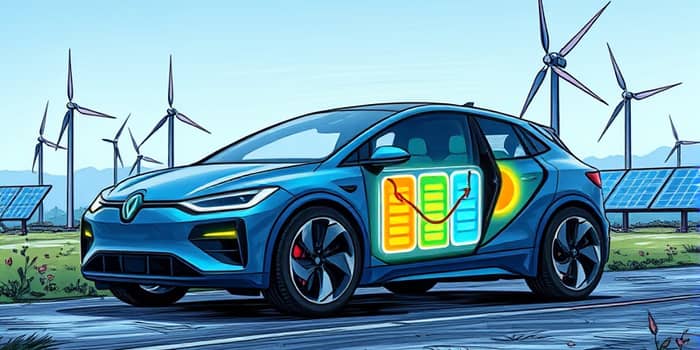
Across the globe, innovators are racing to unleash a new era of energy storage that will transform how we travel, work, and power our homes. Today’s lithium-ion batteries have served us well, but the challenges are clear: rising costs, safety concerns, and finite resources.
Emerging technologies promise to shatter these barriers, enabling unleashing a cleaner, brighter future. From solid-state breakthroughs to alternative chemistries, every advancement brings us closer to a truly sustainable and electrified world.
Lithium-ion remains the dominant rechargeable technology, powering roughly 70% of devices. Yet its reliance on flammable liquid electrolytes poses risks. Incidents of thermal runaway causing devastating device failures have sparked renewed urgency to find safer materials.
Degradation over hundreds of cycles leads to reduced capacity and eventual replacement, while the mining and refining of scarce lithium and cobalt raise ethical and environmental questions. As electric vehicle adoption soars past 90% of Li-ion demand, we must confront these hurdles head-on.
Researchers and manufacturers are exploring a spectrum of chemistry and design innovations. From abundant sodium to high-capacity sulfur, each approach aims to exceed the 150–300 Wh/kg energy density of today’s cells.
This table highlights how diverse chemistries can address specific demands: whether it’s extending range, lowering costs, or improving safety. Each technology is advancing toward commercialization between 2025 and 2030.
Recent years have seen remarkable milestones that underscore the momentum of battery research and deployment.
Next-gen batteries are not just a laboratory curiosity—they are poised to revolutionize multiple sectors.
Despite the promise, significant obstacles remain. Scaling production from pilot lines to gigafactories demands robust supply chains and rigorous quality control. Some chemistries, like sodium-ion, suffer from lower energy density compared to lithium-based systems.
Addressing these challenges requires collaboration among academia, industry, and policymakers. Investment in recycling infrastructure and sustainable mining will ensure that circular economies flourish.
By embracing innovation and fostering responsible development, we can harness these technologies to drive an electric revolution. Consumers, businesses, and governments each play a vital role in shaping a future powered by advanced batteries.
As these next-generation solutions reach mainstream adoption, they will unlock cleaner transportation, resilient energy storage, and truly portable power. Together, let us champion the innovations that will define our sustainable tomorrow.
References