Search
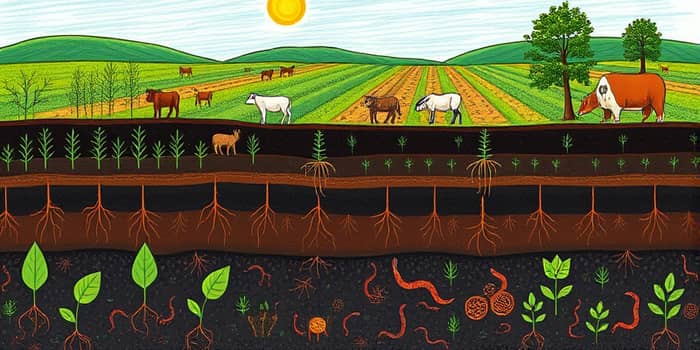
In an era of climate challenges and food insecurity, regenerative agriculture emerges as a beacon of hope. By treating soil as a living ecosystem, farmers can rebuild productivity, sequester carbon, and foster resilience. This article explores how investing in soil health delivers environmental gains and lasting financial returns.
Understanding the principles and practices of regenerative farming allows stakeholders—from producers to investors—to recognize soil as a dynamic asset that appreciates over time.
Regenerative agriculture is defined as an approach that restores and enhances farm ecosystems, placing soil health at its core while generating ecosystem services. Far beyond conventional methods, it aims to reduce external inputs, reverse land degradation, and protect water and biodiversity.
By focusing on living soil as a vibrant ecosystem, this system captures atmospheric CO₂, improves nutrient cycling, and boosts resilience to climate extremes. As such, it transforms farmland into a long-term investment with compound benefits.
Successful regenerative systems adhere to foundational principles that maintain soil integrity and biodiversity. Key tenets include:
Translating principles into action relies on targeted practices that build tangible soil assets. Each practice directly enhances soil function and productivity.
To treat soil like a true asset, stakeholders need reliable metrics. By quantifying improvements, investors can forecast returns and risk reduction over time.
Key soil health indicators include soil organic matter, microbial biomass, aggregate stability, water holding capacity, nutrient cycling, and erosion rates. Below is a concise overview:
Longitudinal studies demonstrate that farms adopting regenerative methods can see a 5–10% SOC increase over a decade, whereas conventional farms often lose 0.1–0.2% annually. Such trends translate into improved yield stability, input savings, and enhanced resilience.
Regenerative agriculture stands at the forefront of climate mitigation. By storing carbon in soils and reducing nitrous oxide emissions from fertilizers, farms can offset a meaningful fraction of greenhouse gases.
Models from Great Britain suggest that widespread adoption of cover cropping, reduced tillage, and grass-based rotations could cut agricultural emissions by 16–27%. Furthermore, healthy soils moderate water cycles—absorbing heavy rainfall, reducing runoff, and supporting drought resistance.
Above and below ground biodiversity thrives under reduced chemical regimes. Diverse rotations, agroforestry, and cover crops create habitats for pollinators, birds, and beneficial insects, strengthening ecosystem services and local food webs.
Beyond environmental returns, regenerative agriculture yields direct benefits for human health. Soil rich in organic matter and microbial life produces crops with higher micronutrient densities.
Studies report regeneratively grown produce can contain up to 17% more vitamin B2, 11% more calcium, and 17–23% more zinc compared to conventionally grown counterparts. Grass-fed meats and dairy from well-managed pastures also offer improved fatty acid profiles.
By investing in soil, communities invest in public health, reducing nutrient deficiencies and building resilience against dietary-related diseases.
Transitioning to regenerative systems requires upfront planning, education, and patience. However, innovative financing models—such as carbon credit markets, green bonds, and impact funds—are emerging to support farmers during the conversion period.
Key steps for investors include:
Such approaches align financial returns with ecological outcomes, creating enduring value for both producers and investors.
Regenerative agriculture offers a paradigm shift: viewing soil as a capital asset rather than a resource to deplete. Through proven principles and practices, farms can restore fertility, capture carbon, and boost yields.
For investors, the appeal lies in quantifiable environmental services and improved farm profitability. As global demand for sustainable food systems grows, those who back soil health initiatives will reap dividends—for the planet, communities, and portfolios alike.
References