
Search
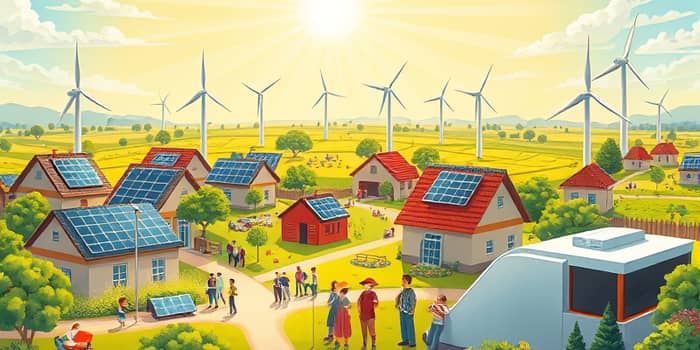
The global energy landscape is undergoing a profound transformation, driven by the need for cleaner power, greater resilience, and economic vitality. Renewable energy microgrids stand at the forefront of this evolution, enabling communities and businesses to harness local resources for sustainable, reliable electricity.
By decentralizing generation and embedding smart controls, these systems deliver autonomous power during grid outages and foster a more secure energy future.
As cities face extreme weather events, and rural areas remain underserved, microgrids emerge as beacons of hope. In this article, we explore their core components, benefits, economic impact, real-world examples, and the path forward for widespread adoption.
At the heart of every renewable microgrid are diverse distributed energy resources (DERs) working in concert. These localized networks can operate independently from, or in parallel with, the main grid.
Leveraging intelligent inverters and energy management software, microgrids can "island" themselves when the main grid fails, ensuring continuous service to critical facilities.
Disruptions from natural disasters, cyberattacks, or equipment failures expose vulnerabilities in centralized grids. Microgrids, by contrast, are designed to maintain power for vital services—hospitals, emergency response centers, schools, and data hubs.
These systems create localized energy systems that foster resilience, delivering immediate backup without waiting for external support. Communities gain safe havens during blackouts, and businesses avoid costly downtime, cementing microgrids as indispensable assets in disaster-prone regions.
Integrating renewables within microgrids yields profound environmental gains. Solar, wind, and biogas sources slash reliance on fossil fuels, curbing emissions and pollution at the point of use.
Communities experience reducing greenhouse gas emissions regionally and enjoy healthier air quality. Businesses see economic growth for local communities as jobs arise in manufacturing, installation, and maintenance of microgrid assets.
Deployments across the United States are accelerating, driven by policy incentives and falling technology costs. By 2030, forecasts from RMI and Guidehouse highlight remarkable expansion:
These projections exclude additional gains from federal incentives like the MICROGRID Act. Anchored by solar and storage pairings, microgrids not only replace diesel generators but deliver long-term savings and reliability.
Across diverse geographies, renewable microgrids are reshaping energy access and community well-being.
In California, policy frameworks and wildfire risks spurred robust investment. Microgrids have fortified rural hospitals and university campuses, ensuring uninterrupted operation during rolling blackouts.
Puerto Rico’s post-hurricane landscape demonstrated microgrids’ lifesaving potential. From an initial 163 jobs and $26.94 million in GDP, the island is poised for a threefold capacity increase by 2030, boosting resilience and local industry.
Beyond these examples, microgrids power remote mines, military installations, agricultural operations, and island resorts, delivering tailored energy solutions where centralized grids cannot reach.
While costs for solar PV and battery storage have plummeted, barriers remain in financing, permitting, and grid interconnection. To accelerate adoption, stakeholders should leverage a combination of incentives and partnerships.
By aligning regulatory frameworks with technology trends, governments and businesses can unlock the full potential of microgrids, creating equitable access to clean energy.
The convergence of renewable technologies, storage innovation, and digital controls paints an inspiring vision: communities that generate, store, and manage their own power. This shift democratizes energy, fostering self-reliance and collective prosperity.
As we strive toward climate goals, renewable energy microgrids emerge not merely as an infrastructure upgrade, but as catalysts for social and economic transformation. They embody a holistic approach—building half a million jobs and $72 billion GDP while safeguarding communities against uncertainty.
Now is the moment for action. By investing in localized microgrids, we invest in our shared future: more resilient neighborhoods, sustainable growth, and a planet powered by clean, renewable energy.
References