
Search
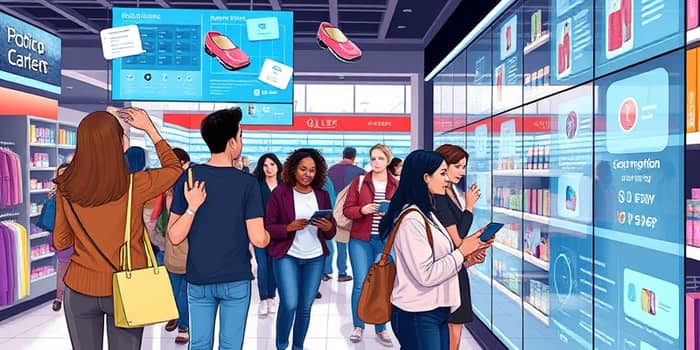
In 2025, personalization has moved from “nice to have” to a core growth engine driving global retail. Across online and in-store channels, brands are discovering that the difference between a completed sale and an abandoned cart often comes down to one thing: relevance.
core growth engine and competitive differentiator is no longer marketing hyperbole. According to industry research, 96% of digital professionals say personalization is key to delivering high-quality digital customer experiences, and 89% of decision-makers agree that it is critical to their business strategy.
As economic uncertainty persists, brands that master personalization can protect their margins, boost retention, and create stronger loyalty. This structural shift is reshaping how products are surfaced, how prices and offers are set, and how stores are staffed to meet individual needs.
Today’s consumers expect personalized interactions at every touchpoint. Relevance is no longer a perk; it is the baseline requirement for any brand seeking to build trust and drive loyalty.
Brands that fail to meet these expectations risk high churn rates and broken loyalty. Irrelevant offers not only waste marketing budgets but also damage relationships.
Personalization is one of the most ROI-positive levers available. Leading retailers see significantly higher growth, increased spending, and improved customer lifetime value compared to their peers.
Top performers generate 40% more revenue than competitors, and 80% of businesses report an average spend increase of 38% when experiences are personalized. In online retail, 98% of merchants confirm that personalization drives up average order value.
Traditional mass marketing casts a wide net and hopes for the best. In contrast, hyper-personalization leverages AI and real-time behavioral data to create experiences that feel uniquely relevant to each individual. This goes beyond static “recommended for you” carousels to truly dynamic, adaptive journeys.
Capabilities include predictive models, next-best-action engines, dynamic content generation, 1:1 offers, and churn-risk scoring. By anticipating needs, brands can curate product selections, tailor pricing, and serve contextual promotions at the exact moment of decision.
Modern retail is a seamless tapestry of digital and physical touchpoints. Customers move effortlessly between mobile apps, websites, social commerce, voice assistants, and in-store kiosks. Personalization must follow them everywhere.
A unified customer profile ensures that each action informs the next interaction, whether a chatbot conversation or in-store inquiry, creating a truly interconnected journey.
Clienteling brings high-touch service back into retail through data-driven interactions between associates and customers. Armed with digital insights, associates can offer styling advice, suggest complementary products, and follow up personally after purchases.
Clients in one-to-one clienteling spend 3–4x more per year and have a 63% higher average order value than customers without personalized service. Moreover, shoppers are willing to pay up to 16% more for tailored experiences that acknowledge their unique preferences.
A robust data foundation is the prerequisite for effective personalization. Retailers must unify customer profiles across channels, automate data quality management, and resolve identities in real time to avoid fragmentation.
Without a clean, single customer view across all channels, personalization efforts can backfire—serving irrelevant content, eroding trust, and missing revenue opportunities. Smart brands invest in automated data pipelines and governance to ensure AI outputs are trusted and accurate.
Next-generation retail personalization shifts from reactive to predictive. AI models anticipate what each customer is likely to need before they even begin searching, delivering next-best-product or content suggestions seamlessly.
These systems continuously learn from every interaction, adjusting recommendations based on live behavior, location, time of day, and external factors like weather. With 25% of consumers open to brands using AI for deeper personalization, retailers can confidently leverage machine learning to craft more engaging experiences.
Gen Z and younger millennials are digital natives who expect real-time consistency across social, mobile, and in-store experiences. Their growing spending power makes them a pivotal segment in the personalization equation.
Brands that deliver unified, hyper-relevant journeys stand to capture early loyalty from these cohorts, who are less forgiving of disjointed experiences and quick to switch to competitors offering more intuitive journeys.
In an uncertain economy, customer retention is paramount. Personalized loyalty programs that reward individual behavior and preferences can outperform generic tiers.
incremental growth before 2030 totaling $570 billion highlights the scale of opportunity for brands that master personalization. By deepening relationships through relevant rewards, targeted outreach, and exclusive offers, retailers can increase share of wallet, reduce acquisition costs, and build enduring loyalty.
Ultimately, personalization is not a one-time project—it is a continuous journey of learning and adapting. Retailers that embed personalization at their core will not only survive but thrive, turning each interaction into a stepping stone toward lasting customer relationships.
References