
Search
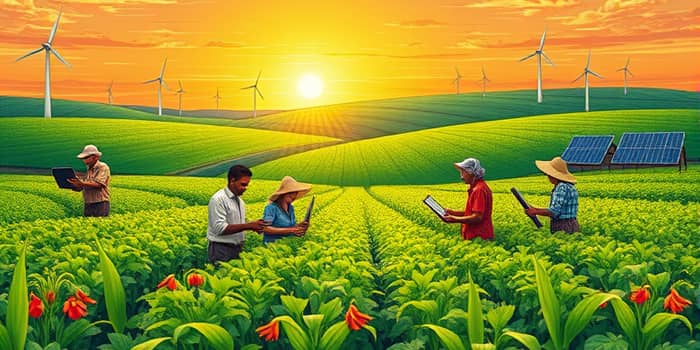
The world stands at a crossroads: nearly one in six people face hunger and millions more grapple with undernourishment. Now, more than ever, sustainable agriculture investments are the beacon of hope. By channeling resources, technology, and inclusive policies into farming, we can fortify global food systems against climate shocks, conflict, and economic turmoil. This article explores how strategic investments, collaborative initiatives, and innovative practices can steer us toward zero hunger.
In 2024, an estimated 8.2% of the global population remains undernourished—down slightly from 8.5% in 2023, yet still far from the UN target of eradicating hunger by 2030. Acute hunger cases have surged to 295 million, marking a sixth consecutive year of rise. More than 2.3 billion people experience moderate to severe food insecurity, a stark reminder that progress is fragile and uneven.
The scale of vulnerability varies dramatically by region. Africa bears the heaviest burden, with over one in five individuals facing chronic hunger. Inflation, elevated energy costs, and disrupted supply chains exacerbate this crisis, pushing families deeper into poverty.
Sustainable agriculture investments directly advance the core targets of SDG 2: doubling small-scale producer incomes (Target 2.3) and fostering sustainable food systems with resilient practices (Target 2.4). These commitments translate into on-the-ground support for women farmers, indigenous communities, family growers, and pastoralists.
By improving land tenure, extending affordable credit, and expanding market access, we empower communities to adopt climate-smart practices that withstand extremes. Integrating digital advisory platforms and precision agriculture tools helps optimize inputs, reduce waste, and boost yields.
Mobilizing finance at scale requires a diversified toolkit. Public budgets must be reallocated toward rural infrastructure, while climate funds and blended finance can leverage private capital. Green bonds and public–private partnerships offer further pathways to fund large projects in storage, transport, and market facilities.
These mechanisms, when aligned with strong policy frameworks, create an enabling environment for sustained growth in agriculture.
From Latin America to Sub-Saharan Africa, innovative projects are already yielding results. In Honduras, a rural competitiveness program reached over 6,200 small producers—33% women and 11% indigenous—generating thousands of jobs and strengthening climate-smart value chains in coffee, dairy, and honey.
In Eastern and Southern Africa, a $2.75 billion resilience initiative bolstered crisis response, market integration, and policy coordination across multiple countries. Meanwhile, emergency seed and fertilizer programs in the Central African Republic and Guinea Bissau rescued hundreds of thousands of farmers from the brink of food collapse.
Collectively, these efforts highlight how focused investments, when tailored to local needs, can transform livelihoods and ensure long-term food security.
Despite successes, significant obstacles persist. Climate shocks—droughts, floods, and rising temperatures—increasingly threaten crop viability. Conflict-driven displacement in regions like Sudan and Yemen disrupts supply chains and deepens hunger.
Women and girls often bear the heaviest burdens, lacking equal access to land, credit, and training. Post-harvest losses, driven by inadequate storage and transport, can exceed 30% in some areas, nullifying productivity gains.
The path to zero hunger hinges on four pillars: innovation, finance, policy, and partnership. First, harnessing digital advisory services, AI-driven forecasting, and data analytics will equip farmers to make timely, informed decisions.
Second, expanding inclusive finance for all stakeholders—from smallholders to agri-SMEs—will unlock the capital needed to scale climate-resilient infrastructure. Third, governments and multilateral institutions must adopt coherent policies that incentivize sustainable land management and strengthen social protection.
Finally, global solidarity is non-negotiable. The upcoming UN Food Systems Summit stocktake in July 2025 offers an unparalleled opportunity to realign national and international strategies, share best practices, and recommit to the UN Pact for the Future.
Every investment in sustainable agriculture is an investment in human potential. By channeling resources into resilient food systems, we safeguard futures, uplift marginalized communities, and preserve our planet —one seed, one field, one life at a time.
Now is the moment for stakeholders—governments, donors, private investors, civil society, and farmers—to unite behind a bold vision: a world free from hunger, where prosperity sprouts from the soil and nourishes every community. Together, we can cultivate hope, equity, and abundance for all.
References