
Search
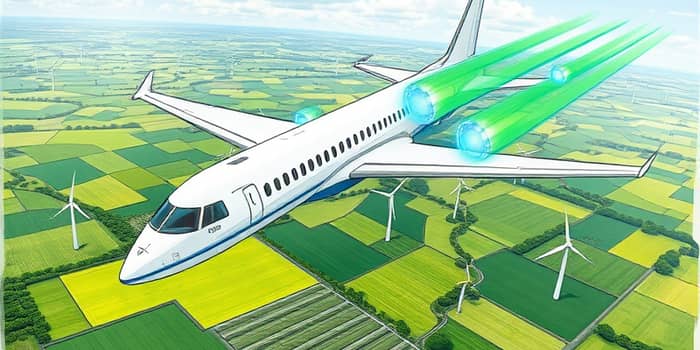
As the aviation industry seeks to balance growing passenger demand with urgent climate goals, Sustainable Aviation Fuels (SAF) emerge as a transformative solution. By leveraging renewable and waste-based feedstocks, SAF can unlock deep emission cuts without waiting for next-generation aircraft.
Aviation contributes about 2–3% of global CO₂ emissions and roughly 9–12% of transportation emissions in the United States. Passenger and cargo traffic are projected to grow sharply, threatening to increase aviation’s climate footprint if no new measures are adopted.
Long-haul routes are a significant long-haul decarbonization challenge due to battery energy density limits and early-stage hydrogen technology. In this context, SAF offers immediate benefits by working with existing fleets and fueling infrastructure.
SAF refers to jet fuel produced from renewable or waste-derived feedstocks that meets stringent technical and sustainability criteria. According to ICAO and IATA definitions, these fuels are chemically similar energy content and performance to conventional Jet A kerosene, ensuring safe and reliable operations.
SAF can be blended with fossil jet fuel—currently up to 50% under ASTM specifications—or used at 100% in future certified engines. This drop-in fuel compatible with existing planes paves the way for nearly immediate emission reductions without aircraft or airport modifications.
Lifecycle analyses demonstrate that SAF pathways can deliver 50–80% lifecycle CO₂ reductions compared to fossil jet fuel, depending on feedstock type, processing energy sources, and land-use considerations.
Beyond CO₂, SAF often contains fewer aromatics and sulfur, leading to lower soot and particulate emissions. Studies show up to a significantly reduce contrail-forming particles with a 50% SAF blend, which may curb warming contrails and cirrus effects.
Emerging electrofuels produced from captured CO₂ and green hydrogen hint at near-zero or net-negative potential, pairing SAF with carbon removal to further mitigate climate impact.
Strict sustainability criteria demand that feedstocks avoid deforestation or ecosystem conversion and not compete with food crops or vital water resources.
Key SAF production technologies include:
Each pathway offers distinct advantages and challenges, from feedstock availability to capital intensity and energy requirements.
Despite promising performance, SAF currently represents less than 0.1% of global jet fuel consumption. Scaling production faces hurdles such as feedstock competition, high capital costs, and complex certification processes.
However, strategic partnerships between airlines, fuel producers, and governments are accelerating plant deployments. Innovations in feedstock pre-treatment, catalytic processes, and integrated biorefineries could drive down costs and expand capacity.
Government policies and economic incentives are vital to stimulate SAF markets and reduce price premiums over fossil jet fuel. Key mechanisms include:
By aligning regulations, financial incentives, and carbon markets, policymakers can bridge the gap between small-scale production and mass deployment.
Research is advancing toward novel feedstocks—such as algae and power-to-liquids—as well as integrated carbon capture and storage in SAF supply chains. New biotechnologies and synthetic biology approaches may unlock even deeper emission cuts while diversifying feedstock sources.
Meeting the International Air Transport Association’s goal of net-zero CO₂ by 2050 will require SAF to deliver roughly 65% of the needed emissions reductions. Combined with improved aircraft efficiency and operational measures, SAF stands as the most feasible near-term solution to decarbonize air travel.
In embracing Sustainable Aviation Fuels, the aviation industry can chart a flight path toward cleaner skies and a healthier planet.
References