
Search
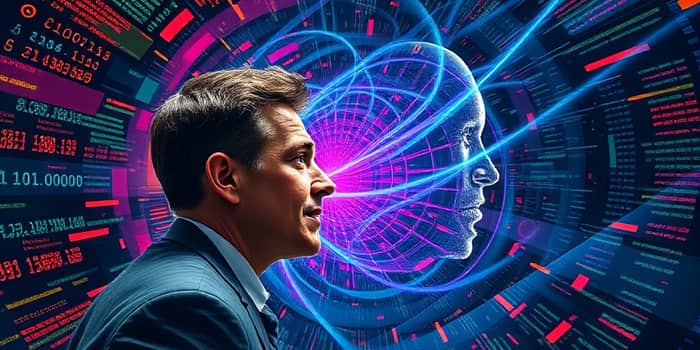
In an era where artificial intelligence fuels innovation, synthetic media has emerged as a transformative force. Yet within its boundless potential lies a shadow: deepfakes weaponized against finance. This article delves into the conceptual roots, real-world impact, technical workings, threat scenarios, and regulatory imperatives that define the ethics of deepfakes in modern banking and markets.
At its core, synthetic media encompasses all AI-generated content. From images to video, from text to audio, these artifacts are forged or altered by deep learning architectures such as GANs, autoencoders, and diffusion models. While often employed for legitimate personalization and accessibility, the same technology enables deceptive fabrications. Deepfakes, a subset of synthetic media, leverage advanced generative algorithms to produce hyper-realistic audio or visuals of specific individuals.
Video deepfakes execute face swaps and expression transfers, while audio deepfakes clone voices with startling accuracy. This fusion of deep learning and creative manipulation erodes trust, particularly in finance, where trust, identity verification, and truthful information are fundamental.
In finance, information is currency. When a voice or video call can be convincingly faked, traditional reliance on audiovisual cues collapses. Institutions face mounting challenges in distinguishing authentic communications from synthetic forgeries, opening avenues for fraud, market manipulation, and reputational attacks.
Finance has already felt the sting of deepfake-enabled fraud. A high-profile case in Hong Kong saw scammers orchestrate a video call impersonation of a multinational firm’s CFO, tricking a finance officer into transferring approximately $25 million. This incident highlights the potency of deepfake-based videoconference fraud against conventional security measures.
Earlier reports detail audio-only scams wherein thieves used AI-cloned CEO voices to demand urgent wire transfers. As tools become more accessible, these threats escalate rapidly.
Industry analysis by FS-ISAC and KPMG warns that deepfake-enabled fraud is a fast-growing enabler of fraud, with reported losses up to $300 million in one year, representing over 200% growth. Vendors such as Feedzai estimate that synthetic identity schemes now account for a significant share of onboarding fraud, straining compliance budgets and customer trust.
The creation of synthetic media unfolds in two phases. During the training phase, models consume vast datasets of real-world audio or imagery. In the generation phase, these systems synthesize content that statistically mirrors the source distribution. With off-the-shelf apps, non-experts can produce convincing fakes in minutes.
Detection remains a cat-and-mouse game. As deepfakes grow more refined, they become nearly indistinguishable from the real thing to human observers. Detection strategies—ranging from digital forensics to AI-based classifiers—struggle against evolving architectures and compression artifacts. Financial channels, characterized by quick, low-friction communication, further limit verification time.
Common architectures include Generative Adversarial Networks (GANs) where a generator and discriminator engage in a feedback loop, and diffusion models that iteratively refine noise into realistic outputs. While GANs excel at face swapping, diffusion approaches produce high-fidelity images but demand greater compute resources. These advancements democratize creation but multiply detection challenges.
The Carnegie Endowment’s taxonomy categorizes deepfake threats across individuals, corporations, and markets. Understanding these scenarios equips institutions to anticipate attacks.
At the individual level, deepfake audio may mimic a customer’s voice to bypass phone-based security, while fabricated videos facilitate synthetic identity fraud during remote onboarding. Cyber extortion networks can deploy non-consensual deepfake content to blackmail executives, threatening reputational damage and financial loss.
Corporations face sophisticated internal scams wherein attackers impersonate senior executives to authorize fund transfers or leak sensitive data. External adversaries might produce damaging videos of CEOs making offensive remarks, triggering market sell-offs in a modern “short and distort” play.
On a broader scale, astroturfing through synthetic botnets amplifies false narratives about companies or sectors. Coordinated waves of AI-generated posts can manipulate investor sentiment, distorting market dynamics and undermining regulatory confidence.
The ethical stakes of deepfakes in finance revolve around accountability, fairness, and protection. Institutions must balance duty of care in remote identity verification with inclusive access for diverse customer bases. Regulators worldwide are exploring frameworks that mandate transparency, require risk assessments, and enforce penalties for malicious synthetic media use.
Governance models recommend cross-sector collaboration, pooling threat intelligence, and integrating deepfake detection into existing compliance workflows. Ethical guidelines call for clear policies on employee training and incident response protocols that prioritize victim support and public disclosure.
Financial firms can adopt a multi-layered defense strategy:
Globally, regulators are drafting frameworks to address AI risks. The EU AI Act proposes classifying deceptive synthetic media as high-risk, imposing strict transparency and pre-market conformity assessments. In the United States, the Securities and Exchange Commission is evaluating guidelines for disclosing synthetic content in investor communications. Meanwhile, the UK’s Financial Conduct Authority has issued advisories urging firms to upgrade their digital forensics capabilities.
Ethically, finance professionals face a moral imperative to scrutinize evidence and challenge assumptions. The principle of transparency should extend to disclosing the use of any synthetic content in marketing or customer interactions. Firms must consider the psychological impact on victims and the broader societal harm when deepfakes disrupt market integrity and individual livelihoods.
As synthetic media technology evolves, so too must the financial sector’s resilience. Embracing robust detection measures, ethical governance, and adaptive regulation will fortify trust in global markets. Ultimately, recognizing the dual nature of AI-driven media—its power to enlighten and to deceive—is essential for safeguarding the integrity of finance in the digital age.
References