Search
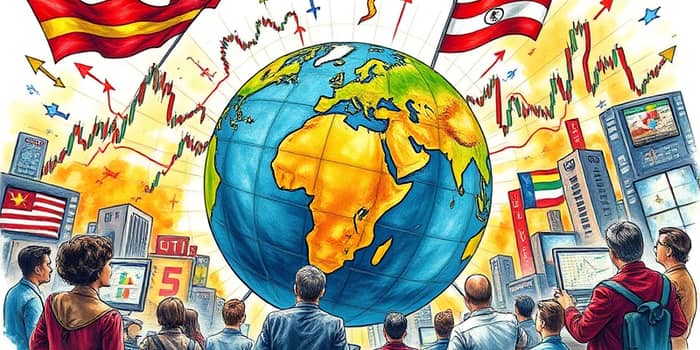
In an interconnected world, geopolitical forces are no longer peripheral—they are central to how investors feel, decide and act. This article unpacks the hidden channels through which conflicts, rivalries and policy shifts shape market sentiment, offering practical insights for navigating today’s uncertain terrain.
At its core, geopolitical risk encompasses a spectrum of events—from great-power rivalry to trade conflicts and resource competition—that transmit through the macroeconomy and into financial markets. Understanding these transmission channels is crucial for anticipating sudden shifts in risk appetite and positioning portfolios accordingly.
These channels feed into market sentiment, reflected in surveys, valuations, positioning and volatility metrics. Geopolitics often lurks unpriced or under-priced until a shock hits, triggering abrupt repricing and risk-off episodes.
Recent surveys and risk reports underline a profound shift: geopolitical concerns now eclipse traditional economic fears among market participants.
UBS’s 2025 Worry Barometer finds that Swiss voters rank global tensions and cost-of-living pressures above unemployment or crime. Respondents explicitly cite US tariff policy and the Russia–Ukraine conflict as top drivers of anxiety over trade and energy prices.
The World Economic Forum’s Global Risks Report 2025 reports that 52% of chief risk officers expect an unsettled short-term future dominated by conflict, misinformation and severe weather. Geopolitical fracture tops the list of defining global shifts.
Meanwhile, ESMA flagged pronounced volatility across major asset classes in H1 2025, attributing spikes to escalating trade conflicts. Regulators warned that unexpected geopolitical developments could trigger sudden market corrections and liquidity strains.
Together, these data points reinforce that geopolitics has moved from background noise to a primary driver of sentiment and risk assessment.
Investors monitor several key fault lines that channel regional risks into global markets:
Each axis generates distinct market signals—risk-off equity spikes, commodity rallies, bond yield shifts and sectoral re-rating—underscoring the need for scenario planning and dynamic positioning.
Geopolitical tensions are baked into macro forecasts and asset-class risk premia. Forecasts by S&P Global and J.P. Morgan illustrate how conflicts and trade fragmentation shape growth, inflation and policy paths.
This table highlights how inflation may remain structurally higher and policy rates settle above pre-pandemic lows, reflecting rising defense and security expenditures along with supply-chain adjustments.
Geopolitical uncertainty amplifies market volatility and credit risk premia. ESMA’s 2025 risk assessment shows:
These movements illustrate how unexpected geopolitical events drive sudden shifts in positioning, with long-term implications for risk-adjusted returns.
As geopolitical forces continue reshaping markets, investors should adopt frameworks that blend traditional macro analysis with scenario planning around regional fault lines.
Key strategies include:
By recognizing geopolitics as more than background noise, investors can better anticipate sentiment swings, protect capital and capture opportunities in a fractured global order.
In today’s markets, the invisible hand of geopolitics moves swiftly and with conviction. Armed with a robust conceptual framework, empirical insights and scenario-based tactics, market participants can transform uncertainty into strategic advantage.
References