Search
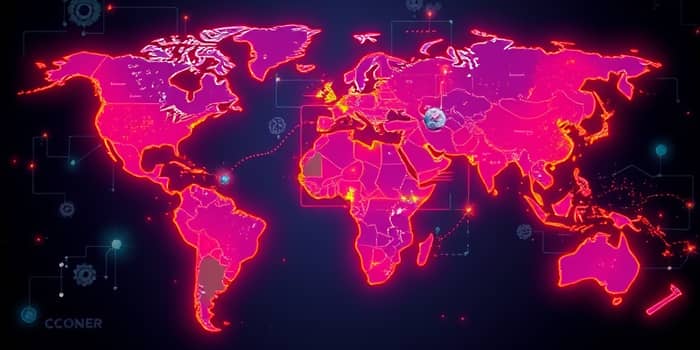
As the dust settles on the unipolar era, a new era of economic competition and cooperation is emerging. The contours of global influence are redrawn around powerful regional coalitions, rising middle powers, and transformative trends that will shape the twenty-first century.
In the aftermath of the Cold War, the world operated under a US-led unipolar order defined by liberalization, open markets, and a single dominant military superpower. Today, that model is evolving into a multipolar, bloc-based system where coalitions set rules, coordinate policy, and compete for influence.
Economic globalization is no longer a one-size-fits-all project but a tapestry of overlapping networks. We have moved from “Globalization 1.0” centered on the United States to “Globalization 2.0,” characterized by regionalized, securitized, and bloc-fragmented trade and investment flows.
Analysts commonly identify four primary economic power blocs based on scale, growth prospects, and rule-setting potential: the United States, China, the European Union, and India. Together, they control roughly 63% of global GDP, 45% of the world’s population, and 37% of global trade.
The US-led coalition, reinforced by alliances with Europe, Japan, Australia, and India, wields:
While the US shifts from “globalization champion” to strategic protectionist—introducing industrial subsidies and export controls—the bloc’s strength lies in coalition-building among like-minded democracies and key swing states.
China’s state-capitalist model fuels rapid growth in R&D, where its spending gap with the US is now only around 10%. By 2030, China may close its GDP gap entirely. Infrastructure initiatives like the Belt and Road Initiative have created corridors spanning Asia, Africa, Europe, and Latin America.
Through the Asian Infrastructure Investment Bank and alternative payment systems, China contests dollar dominance. Its manufacturing prowess remains unrivaled, prompting trade diversion toward Europe and North America as tariffs rise.
The EU stands out for its normative power in regulation, shaping global data, competition, and carbon policies. As the world’s largest single market, it wields trade leverage but faces slower growth and high energy costs.
Internal fragmentation and security dependence on the US coexist with an ambition for strategic autonomy in defense, industrial policy, and digital regulation. Climate leadership strengthens the bloc’s global influence.
With the world’s largest and youngest population, India is projected to be the fastest-growing major economy. Its demographic weight will overtake China’s by mid-century.
Practicing multi-alignment and strategic autonomy, India balances security ties with the US-led Quad, economic links with China, and energy partnerships with Russia and the Gulf. As a swing state, it offers pivotal support for democratic rule-making or alternative models.
Beyond the big four, the BRICS+ configuration—Brazil, Russia, India, China, South Africa, and expanding partners—forms a heterogeneous bloc representing over 40% of the world’s population. Though diverse in governance and interests, these nations seek greater say in global institutions and financial architecture.
Many Global South economies look to China for infrastructure finance, to the EU for regulatory cooperation, and to the US for security guarantees, reflecting a pattern of strategic hedging and connector roles.
Amid bloc competition, a network of middle powers—South Korea, Australia, Brazil, Turkey, Indonesia, Mexico—plays a vital role as connectors. These economies:
By deepening ties across blocs, these nations enhance resilience, reduce dependency, and shape norms in emerging domains like AI ethics and climate finance.
Four overarching dynamics will define bloc competition and cooperation in the coming decades:
These trends fuel both competition and collaboration. For example, climate initiatives may unite democracies, while digital security concerns drive new protectionist measures.
We stand at a crossroads: Will a coalition of liberal democracies harness collective strength to uphold open markets and human rights? Or will an authoritarian, state-capitalist hyperpower set alternative rules? The answer lies in how major blocs, middle powers, and the Global South plasticize their partnerships.
Policymakers and business leaders must adopt a twin approach: deepen ties within like-minded coalitions while engaging strategically with other blocs. Embracing flexible partnerships and rule-shaping initiatives will ensure resilience in supply chains, innovation ecosystems, and financial systems.
Ultimately, the emerging multipolar order offers opportunities for diversified growth, shared innovation, and inclusive governance—provided stakeholders rise above zero-sum thinking and craft collaborative frameworks for global challenges like climate change, pandemics, and digital security.
References